Issue #23 February 09, 2024 |
| |
|
Greetings friends! Today I have one short video for you and two new prints available! I’ve been painting my way through the Orthodox calendar, focusing on the saints who are most inspiring to me personally. This is also helping me to achieve my 2024 vocational goals by filling my Etsy shop with very affordable prints. Purchasing my art is the #1 way to support me, and these prints make what I’m doing accessible even for folks on a tight budget. |
|
|
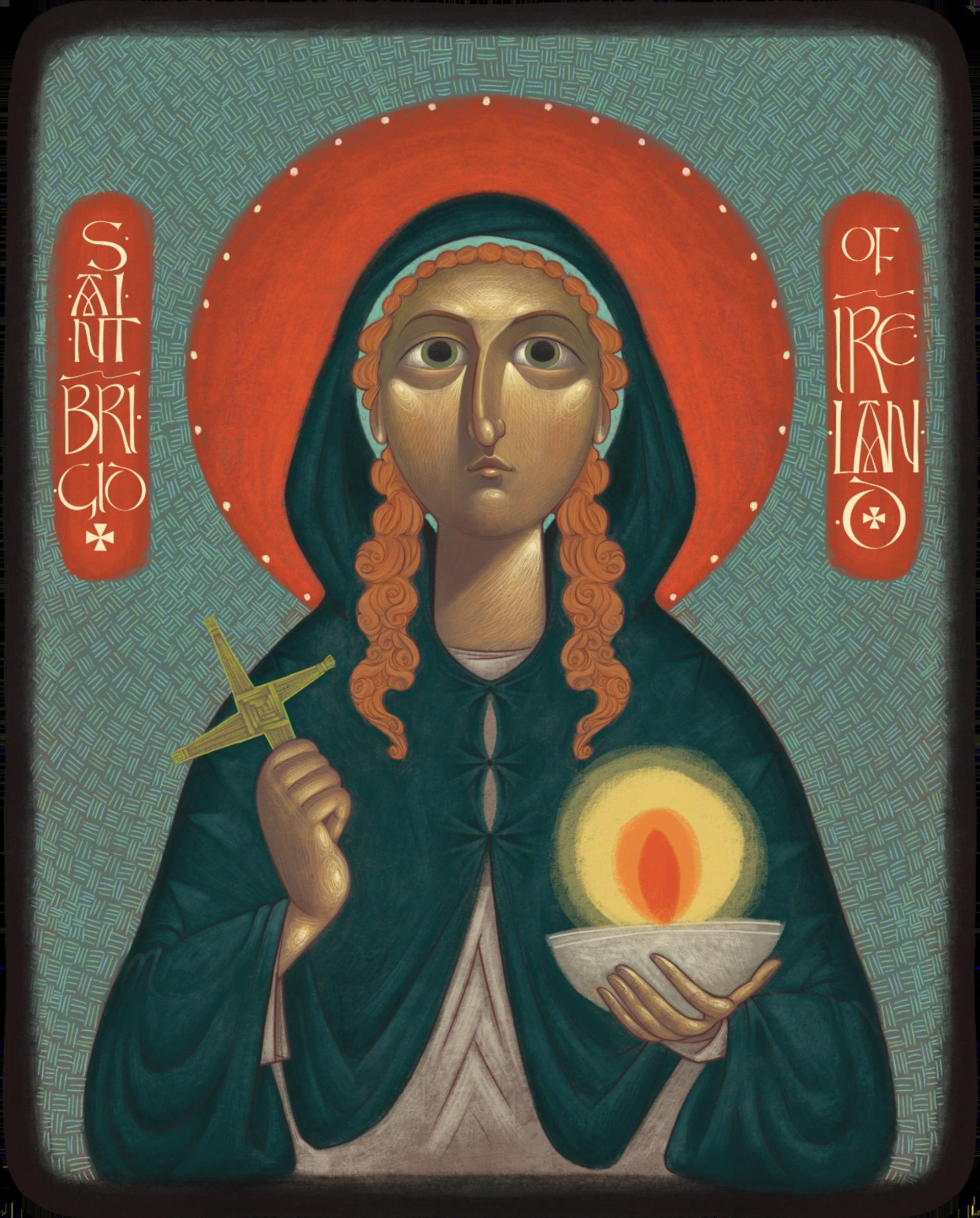
| For saints like St Brigid there are very few early images. The earliest I found was from a 12th century illuminated manuscript, and she was grouped with a few thematically related saints (Ss Anastasia of Sirmium, Petronilla, Benedicta, and Gertrude) with the inscription ora pro nobis which means, “Pray for us”. When there is a lack of early imagery, I feel even more compelled to find a way to know the Saint. After all, the iconographer is not so much concerned with an exacting material likeness, but with an exacting spiritual likeness. This makes hagiographical accounts invaluable… … It also often means I have to do a ton of reading and research. It wouldn’t be much work for me to unload everything I’ve come to know, but haven’t share, of St Brigid of Ireland and St Symeon the God-Receiver. But instead, I’ll share what I think is most important about these saints: They saw salvation. St Brigid was known for many things but is especially revered for her chastity and “mischievous” generosity. I describe her generosity as mischievous because it often got her into trouble with folks who didn’t have eyes to see what she was really up to. |
|
|
She gave away so many of her father's possessions that he grew weary of her and decided to try to sell her off to the king. St Brigid’s generosity was so extreme that she even gave away her father’s fancy sword to a poor man while he was distracted on the journey to sell her to the king! In the end, the king was able to see that St Brigid was a servant of Christ and condescended to the father by giving him an even more valuable sword. I like to imagine that St Brigid’s father was so ennobled by her daughter that he gave it away to some poor stranger on the way home. On another occasion of giving away the possessions of a local wizard (a Celtic druid), St Brigid was asked why she did such things. St Brigid said, “Christ is in the person of every faithful poor man”. St Brigid saw Christ in all the poor and needy around her. St Brigid saw everything else around her as belonging to Christ. This is the root of her mischievous, and some would say foolish, generosity. |
|
|
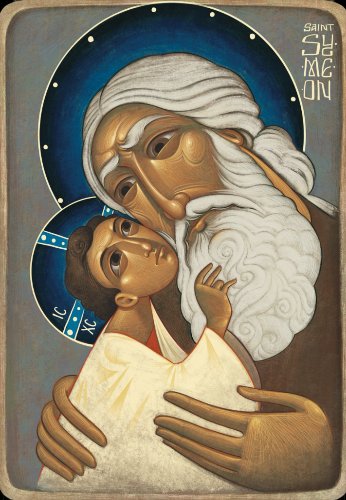
| St Symeon the God-Receiver is known as the one who held the infant Christ when he was presented on the eighth day for circumcision, but is perhaps better known for his hymn, Nunc dimittis: Lord, now lettest thou thy servant depart in peace, according to thy word: For mine eyes have seen thy salvation, Which thou hast prepared before the face of all people; A light to lighten the Gentiles, and the glory of thy people Israel. This hymn is sung at Vespers, the evening prayer service of the Church. It is preparatory in two ways: (1) Helps us to be vigilant in keeping our eyes fixed on Christ in the coming day, and (2) Comforts us as we prepare for death when we lay down to sleep. Fewer people know that St Symeon was also among the 70 scholars who worked to translate the Hebrew Scriptures into Greek, and this is known as the Septuagint. St Symeon was translating Isaiah 7.4 and thought that he discovered a textual error when reading the word “virgin”. He intended to correct the text to read “young woman” but was interrupted by an angel who assured him that he would live to see the Messiah born of a virgin. |
|
|
St Symeon then lived to the ripe age of 360. This makes the phrase, “Now let your servant depart in peace”, feel a little more like, “Thank God I can finally die!” Joking aside, St Symeon saw Christ—he saw salvation. It was not a shadow or an allusion of salvation, but the very Person who is himself the light that enlightens the Gentiles and the glory of Israel. Tying these two saints together is the theme of sight. Learning to see is what icons are all about. They instruct us in spiritual sight, which is in many ways truer that what we can perceive with our eyes alone. This is the kind of sight St Brigid possessed, and it was how she was able to see Christ in every person around her—especially the most vulnerable. |
|
|
FOLLOW ME IN THESE SPACES |
|
|
Thank you for all your support! ~Alypius (Emanuel Burke) Website: www.alypiusloft.com Email: emanuel@alypiusloft.com |
| | Haiku Corner Goes out, Comes back-- the love of a cat. --Issa |
|
|
|